Wood Construction
What Is Wood Construction in Exhibition and Booth Building?
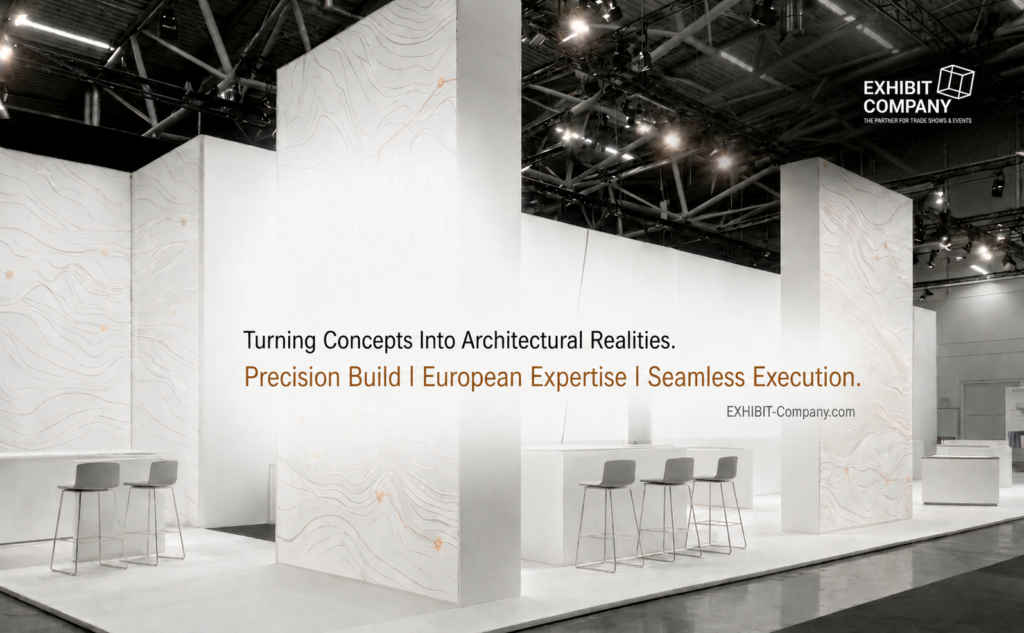
Wood Construction in the exhibition industry refers to the engineering and fabrication of trade show structures using wood-based materials such as MDF, plywood, chipboard, and solid timber. It forms one of the most widely used construction methods for custom exhibition stands, enabling flexible design freedom, high-quality finishes, and fully branded architectural environments.
In modern exhibition production, wood construction is not simply traditional carpentry—it is a precision-based fabrication system that integrates CAD design, CNC machining, structural planning, and on-site assembly workflows. It allows exhibition builders to create fully customized environments that combine architectural storytelling with functional space planning.
Wood construction is especially dominant in custom-built exhibition stands because it supports complex geometries, seamless branding surfaces, and cost-efficient production for both one-off and reusable booth systems.
Why Wood Construction Is Essential in Exhibition Design
Wood remains one of the most versatile and widely used materials in trade show environments due to its adaptability and aesthetic flexibility.
Key advantages include:
- High design flexibility for custom booth structures
- Smooth surfaces ideal for graphics, laminates, and finishes
- Cost efficiency compared to full metal structures
- Easy integration with lighting, AV, and branding systems
- Strong adaptability for modular and hybrid exhibition systems
Wood-based booth construction is frequently used for feature walls, counters, meeting rooms, product displays, and full architectural stand builds.
Core Materials Used in Wood Construction
MDF (Medium Density Fiberboard)
MDF is one of the most common materials in exhibition wood construction due to its smooth finish and machinability.
Typical uses include:
- Printed wall panels
- Feature backdrops
- Counter fronts
- Decorative structures
MDF is especially valued for its perfect surface quality for branding applications and CNC precision cutting capabilities.
Plywood
Plywood provides structural strength and is often used for:
- Load-bearing booth structures
- Flooring systems
- Reinforced frames
- Transportable modular elements
It is preferred where stability and durability are required under repeated assembly cycles.
Solid Timber
Solid wood is used for premium architectural exhibition builds where natural aesthetics are important, including:
- Luxury brand stands
- Sustainable exhibition concepts
- High-end structural accents
Wood-based exhibition systems can create a warm, inviting spatial experience compared to industrial metal frameworks.
Chipboard and Laminated Panels
These materials are commonly used for cost-efficient builds and reusable exhibition systems, often finished with:
- Laminates
- Veneers
- Printed surfaces
- Protective coatings
How Wood Construction Works in Exhibition Projects
1. Concept and CAD Design Integration
Wood construction begins with detailed CAD design and technical drawings that define:
- Booth layout and dimensions
- Structural components
- Material specifications
- Assembly logic
This ensures every wooden element is buildable and compliant with venue regulations.
2. CNC Cutting and Fabrication
Modern wood construction relies heavily on CNC technology for:
- Precise cutting of panels and structures
- Repetitive modular component production
- Complex geometric shaping
- Material optimization and waste reduction
This ensures consistency and speed in production workflows.
3. Workshop Assembly
Before transport, major booth elements are often pre-assembled in workshops to:
- Test structural fit
- Check alignment and stability
- Identify design adjustments early
- Reduce on-site installation risks
4. On-Site Installation
At the exhibition venue, wood structures are assembled rapidly within strict time windows:
- Frame installation
- Panel mounting
- Surface finishing
- Graphic and lighting integration
Efficient installation is critical due to limited build-up time in trade show environments.
Wood Construction vs Metal Fabrication in Exhibitions
Wood Construction
- Focus: Custom surfaces, architecture, branding integration
- Materials: MDF, plywood, solid timber
- Strength: Visual flexibility and design freedom
- Use case: Custom exhibition stands and branded environments
Metal Fabrication
- Focus: Structural engineering and load-bearing systems
- Materials: Aluminum, steel
- Strength: Durability and modular frameworks
- Use case: Large-scale or multi-level structures
Wood construction often works in combination with metal systems to create hybrid exhibition environments that balance strength and aesthetics.
Strategic Importance of Wood Construction in Trade Shows
1. Full Creative Freedom
Wood allows designers to build:
- Organic shapes
- Curved architectural forms
- Fully branded environments
- Immersive spatial storytelling concepts
2. Strong Visual Branding Capability
Wood surfaces can be finished with:
- High-resolution graphics
- Laminates and textures
- Paint systems
- Integrated lighting effects
This makes it ideal for brand-heavy exhibition experiences.
3. Cost-Effective Customization
Compared to steel-heavy builds, wood construction offers:
- Lower material costs
- Faster fabrication cycles
- Flexible design iteration
4. Sustainable Material Strategies
Wood-based exhibition systems increasingly align with sustainability goals through:
- Reusable modular structures
- Recyclable materials
- Reduced industrial waste
- Eco-certified panel systems
Common Applications of Wood Construction in Exhibitions
- Custom exhibition stands
- Product display environments
- Reception and hospitality areas
- Meeting rooms and private spaces
- Brand storytelling installations
- Retail-inspired booth concepts
Wood construction enables full spatial storytelling across all booth sizes and configurations.
Challenges in Wood Construction for Exhibitions
1. Time-Compressed Production Cycles
Exhibition schedules require fast turnaround from design approval to on-site build.
2. Precision Requirements
Even minor inaccuracies in cutting or assembly can impact:
- Structural alignment
- Graphic placement
- Installation speed
3. Transport Sensitivity
Wood components must be designed for:
- Safe transport
- Damage resistance
- Efficient packaging
4. Moisture and Durability Considerations
Certain wood materials must be protected from humidity, handling stress, and repeated assembly cycles.
Future Trends in Wood Construction
1. Modular Wooden Systems
Reusable wood-based systems are becoming more common, allowing:
- Multi-event reuse
- Flexible reconfiguration
- Reduced material waste
2. CNC-Driven Precision Manufacturing
Advanced CNC workflows are improving accuracy and reducing manual production time.
3. Hybrid Wood-Metal Systems
Combining structural metal frameworks with wood finishes for improved performance and aesthetics.
4. Sustainable Material Innovation
Growing adoption of:
- Low-emission MDF
- Recycled wood fibers
- Eco-certified adhesives and coatings
Frequently Asked Questions (FAQ)
What is wood construction in exhibition design?
Wood construction refers to building exhibition stands using materials like MDF, plywood, and timber to create custom booth structures.
Why is wood used in trade show booths?
Because it offers flexibility, cost efficiency, smooth branding surfaces, and high design adaptability.
What materials are used in wood construction?
Common materials include MDF, plywood, solid timber, chipboard, and laminated panels.
Is wood construction strong enough for exhibition stands?
Yes, when engineered properly, wood construction provides sufficient strength for most custom exhibition environments.
What is the difference between wood construction and metal fabrication?
Wood construction focuses on design and surface aesthetics, while metal fabrication focuses on structural load-bearing systems.
Can wood exhibition stands be reused?
Yes, many modern systems are designed for modular reuse across multiple events and trade shows.