Assembly
What Is Assembly in Trade Show and Exhibition Construction?
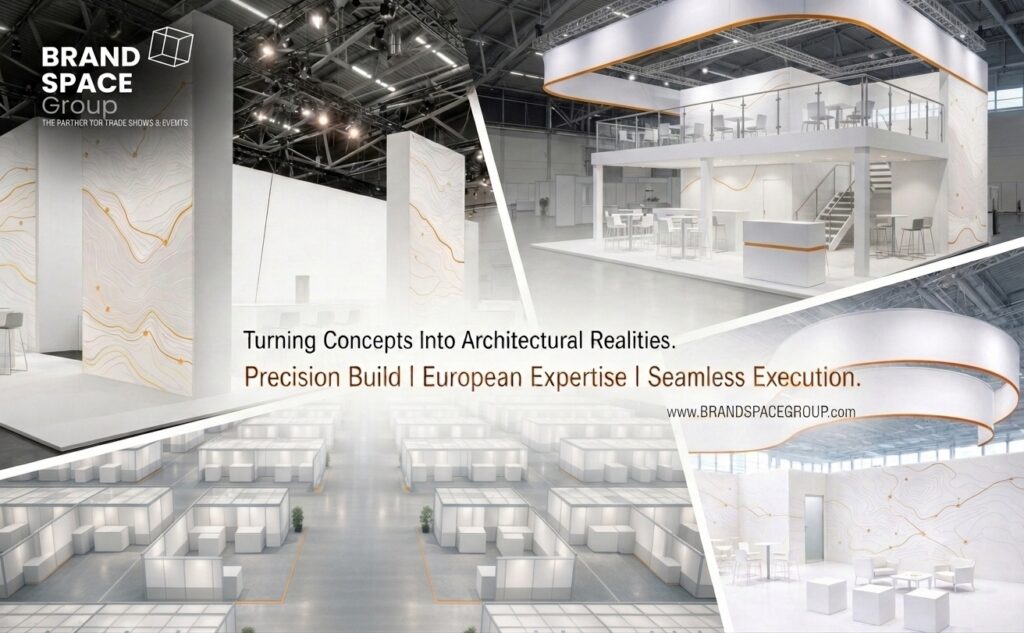
Assembly refers to the on-site or off-site process of systematically connecting, installing, and structurally integrating all components of a trade show booth or exhibition stand—including framework, flooring, graphics, electrical systems, AV technology, and furniture—into a fully functional and visitor-ready environment within a defined build-up window.
In the exhibition industry, assembly is the technical backbone of booth realization, transforming engineered components, flat-packed systems, or custom-fabricated elements into a complete spatial brand environment. It is typically executed by Installation & Dismantle (I&D) crews, technical specialists, carpenters, electricians, and rigging teams working under strict venue regulations and time-controlled access schedules.
Modern booth assembly is no longer a purely manual construction task. It is a sequenced logistics-driven operation where precision timing, pre-fabrication quality, and cross-disciplinary coordination determine execution success.
Why Assembly Is a Critical Phase in Exhibition Execution
Assembly sits at the center of the exhibition lifecycle because it directly determines whether a booth becomes:
- A functional sales environment
- A brand experience platform
- A technical demonstration space
- Or a delayed, incomplete installation under time pressure
Across global trade fairs, assembly performance impacts:
- Opening-day readiness
- Visitor experience quality
- AV and digital performance reliability
- Labor efficiency and overtime costs
- Compliance with venue build-up deadlines
Because multiple exhibitors operate simultaneously in confined hall spaces, assembly is executed under high-density logistics conditions with forklifts, freight traffic, and parallel installations occurring across the entire venue floor.
Core Components of Exhibition Assembly
1. Structural Framework Assembly
The first stage of booth assembly focuses on physical structure:
- Modular or custom frame systems are aligned and fixed
- Load-bearing elements are stabilized
- Wall panels, partitions, and structural shells are installed
- Hanging or truss elements are rigged where required
This stage defines the spatial footprint and structural integrity of the booth.
2. Flooring and Base Systems
Before upper structures are finalized:
- Raised floors or platform systems are installed
- Carpet tiles or finishes are applied
- Cable management channels are integrated
- Leveling adjustments are made for safety and alignment
A stable base is essential for all subsequent installation steps.
3. Electrical and Technical Integration
Once structure is in place, technical systems are installed:
- Power distribution and cabling
- Lighting systems and control units
- AV systems including screens and sound equipment
- Digital and interactive technologies
In many cases, electrical work must be coordinated with certified venue electricians to ensure compliance.
4. Graphic and Branding Installation
Visual identity is applied to transform structure into brand space:
- Fabric graphics and tension systems are mounted
- Printed panels and backwalls are installed
- Header boards, signage, and branding elements are aligned
- Lighting is calibrated to enhance visual impact
At this stage, the booth begins to communicate its marketing message.
5. Furniture, Products, and Activation Setup
Assembly concludes with functional activation:
- Product displays and demo stations are positioned
- Meeting areas and hospitality zones are arranged
- Furniture and storage units are installed
- Interactive elements are tested
This transforms the structure into a fully operational exhibition environment.
Assembly in the Context of Exhibition Logistics
Assembly vs Installation
- Installation focuses primarily on labor execution and technical build tasks
- Assembly is broader, including structural sequencing, integration, and system alignment
Assembly vs Booth Setup
- Booth setup includes logistics + freight + staging + assembly
- Assembly is the core construction phase within setup
Assembly vs Build-Up Phase
- Build-up is the venue access window
- Assembly is the active construction process happening within that window
Why Assembly Complexity Is Increasing in Modern Exhibitions
Modern exhibition environments are evolving due to:
- More complex AV and digital systems
- Larger modular and hybrid booth structures
- Increased sustainability requirements
- Shorter build-up windows at major venues
- Higher expectations for brand experience quality
Industry analyses show that successful assembly today depends heavily on pre-planning, modular engineering, and precise sequencing of installation steps rather than purely on-site craftsmanship.
Even small sequencing errors—such as installing graphics before structural alignment or delaying electrical integration—can significantly impact final booth performance.
Strategic Importance of Assembly
1. Determines First Impression at Show Opening
A fully completed assembly ensures:
- Immediate visitor engagement
- Strong brand credibility
- Functional readiness from opening hour one
2. Directly Impacts ROI
Efficient assembly reduces:
- Labor overtime costs
- Rework and correction time
- Downtime during critical show hours
3. Ensures Technical Reliability
Proper integration ensures:
- Stable lighting performance
- Reliable AV and digital systems
- Safe electrical distribution
4. Optimizes On-Site Workflow
Well-sequenced assembly reduces:
- Crew congestion
- Material handling delays
- Cross-team interference
5. Enhances Brand Experience Quality
A precise assembly process ensures that design intent translates into a consistent physical visitor experience.
Common Challenges in Assembly Operations
1. Freight Delays or Incomplete Deliveries
Missing components disrupt sequencing and delay installation progress.
2. Misaligned Installation Sequencing
Incorrect order of operations leads to rework and inefficiencies.
3. Technical Integration Conflicts
Electrical or AV systems may not align with structural readiness.
4. Labor Coordination Gaps
Multiple crews working in parallel can cause workflow congestion.
5. Time Compression Under Venue Deadlines
Strict build-up windows force accelerated execution, increasing risk of errors.
Future Trends in Exhibition Assembly
1. Modular and Pre-Fabricated Systems
Assembly is increasingly shifting toward:
- Tool-less connections
- Pre-engineered modular frames
- Rapid installation systems
2. Digital Assembly Planning Tools
3D and simulation-based planning enables:
- Installation sequencing optimization
- Risk reduction before on-site execution
- Improved labor allocation
3. Integrated Event Lifecycle Platforms
Future systems unify:
4. Smart Asset Tracking
RFID and digital tagging improve:
- Component tracking accuracy
- Loss prevention
- Post-show inventory management
Frequently Asked Questions (FAQ)
What does assembly mean in a trade show?
Assembly is the process of constructing and integrating all booth components into a complete exhibition stand during the build-up phase.
Is assembly the same as installation?
Not exactly. Installation refers mainly to labor execution, while assembly includes structural building, sequencing, and system integration.
Who performs booth assembly?
Assembly is carried out by I&D crews, carpenters, electricians, riggers, and technical specialists coordinated by the general service contractor.
When does assembly take place?
It occurs during the official move-in and build-up period before the trade show opens.
What are the main steps in booth assembly?
Structural construction, flooring, electrical integration, graphics installation, and final activation of displays and furniture.
Why is assembly so important for exhibitors?
Because it determines whether a booth is fully functional, visually complete, and operational from the first moment visitors enter the show floor.