Booth Layout
What Is Booth Layout in Trade Show Design?
Booth Layout refers to the strategic arrangement of physical space within a trade show booth, defining how visitors enter, move through, interact with, and exit an exhibition environment. It is the spatial blueprint that translates exhibition objectives into visitor behavior, ensuring that branding, product displays, meeting areas, and engagement zones work together as a unified system.
In modern exhibition practice, booth layout is no longer just a matter of placing furniture inside a footprint. It is a behavior-driven spatial design discipline that combines visitor psychology, circulation planning, and brand storytelling to optimize engagement outcomes on the show floor.
A well-designed booth layout directly influences key performance indicators such as dwell time, lead generation, and conversation quality, making it one of the most critical components of trade show success.
Why Booth Layout Matters in Exhibition Performance
Booth layout determines how effectively a brand can convert foot traffic into meaningful engagement. In crowded exhibition halls where attention spans are measured in seconds, spatial structure becomes a silent but powerful communication tool.
Key performance impacts include:
- First impression and stopping power from the aisle
- Ease of entry and psychological openness
- Flow of visitor movement through the space
- Balance between open engagement and private interaction
- Conversion efficiency from visitor to lead
Exhibitors often underestimate layout, focusing instead on graphics or technology, yet layout is what determines whether visitors actually enter and engage or simply pass by.
Core Principles of Effective Booth Layout Design
1. Open Flow and Accessibility
Modern booth layouts prioritize openness at the entrance to reduce psychological barriers. Visitors are more likely to enter spaces that feel:
- Welcoming rather than enclosed
- Clearly accessible from multiple angles
- Free of physical obstructions at the front
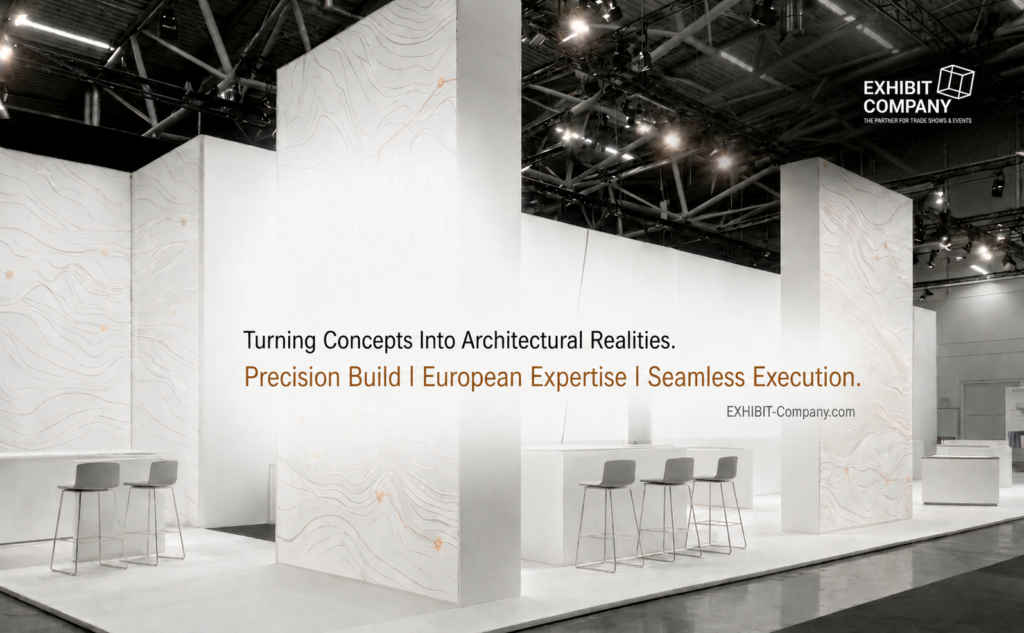
Best practice layouts often position counters and displays toward the perimeter, keeping the entry zone visually open and inviting.
2. Clear Functional Zoning
High-performance booth layouts divide space into functional zones that support different engagement stages:
- Attraction zone: Primary branding and visual messaging
- Engagement zone: Product interaction and demonstrations
- Conversation zone: Staff-led discussions and qualification
- Private zone: Meetings and deeper sales conversations
This zoning ensures that visitor flow naturally progresses from awareness to engagement to conversion.
3. Visual Hierarchy and Focal Points
A strong booth layout guides the eye before it guides the body. Visual hierarchy is created through:
- Backwall dominance for primary messaging
- Central focal elements (product, screen, or structure)
- Height variation for visibility across aisles
- Strategic lighting emphasis
Without hierarchy, visitors experience visual noise instead of a clear narrative.
4. Traffic Flow Engineering
Booth layout functions like a circulation system. The goal is to avoid congestion while maximizing interaction opportunities.
Effective flow principles include:
- No dead ends or blocked corners
- Circular or loop-based movement paths in larger booths
- Multiple entry points for corner or island stands
- Clear separation between walking paths and interaction zones
Poor flow design leads to bottlenecks, reduced dwell time, and missed engagement opportunities.
5. Behavioral Psychology in Spatial Design
Booth layout is deeply connected to how people behave in public environments:
- People avoid tight or cluttered entry points
- Open sightlines increase perceived trust
- Natural movement paths increase dwell time
- Visible activity attracts additional traffic
Research in exhibition design consistently shows that layout influences visitor behavior as strongly as messaging or branding.
Common Booth Layout Types
Inline Booth Layout
- One open side facing the aisle
- Strong reliance on backwall messaging
- Compact, focused engagement zone
- Best for clear product or service communication
Corner Booth Layout
- Two open sides for increased visibility
- Improved traffic flow and entry flexibility
- Requires careful placement of focal points
Peninsula Booth Layout
- Three open sides
- High exposure from multiple directions
- Strong need for 360° design consistency
Island Booth Layout
- Four open sides with full accessibility
- Maximum layout freedom and engagement potential
- Requires advanced zoning and flow planning
Strategic Role of Booth Layout in Lead Generation
Booth layout directly influences conversion efficiency by structuring how visitors interact with the brand.
A high-performing layout:
- Draws visitors in without friction
- Guides them through product narratives
- Creates natural stopping points for conversation
- Separates casual traffic from qualified leads
In essence, layout acts as a silent sales funnel built into physical space.
Booth Layout vs Booth Design
Booth Layout
- Focuses on spatial arrangement and visitor flow
- Determines movement, zoning, and interaction structure
- Behavior-driven planning discipline
Booth Design
- Focuses on visuals, branding, materials, and aesthetics
- Enhances communication and brand perception
- Works within the structure defined by layout
Layout defines the structure; design defines the expression.
Common Booth Layout Mistakes
Blocking the Entry Point
Placing counters or displays directly at the front creates psychological barriers that discourage entry.
Overcrowding the Space
Too many elements reduce clarity and interrupt visitor movement.
Ignoring Visitor Flow Direction
Failing to consider natural walking patterns leads to underutilized areas.
Lack of Functional Zoning
Without clear separation, engagement areas compete with each other, reducing effectiveness.
Future Trends in Booth Layout Design
Data-Driven Layout Optimization
Exhibitors increasingly analyze:
- Visitor heatmaps
- Dwell time patterns
- Conversion hotspots
to refine future booth layouts.
Adaptive and Modular Layout Systems
Booth layouts are evolving toward reconfigurable systems that adapt to:
- Different booth sizes
- Different show formats
- Regional variations
Experience-Centric Spatial Design
Layouts are shifting from product display models to experience journeys, where visitors move through curated brand environments rather than static presentations.
Frequently Asked Questions (FAQ)
What is booth layout in a trade show?
Booth layout is the strategic arrangement of space inside an exhibition stand that defines how visitors move, interact, and engage with the brand.
Why is booth layout important?
Because it directly impacts visitor flow, engagement quality, dwell time, and lead generation performance.
What are the main types of booth layouts?
Common layouts include inline, corner, peninsula, and island configurations, each with different visibility and flow characteristics.
What makes a good booth layout?
A good booth layout ensures open entry, clear visitor flow, functional zoning, and strong visual hierarchy.
How does booth layout affect sales?
It structures how visitors are guided through the booth, influencing how long they stay and how effectively they engage with products or staff.
Is booth layout more important than booth design?
Both are essential, but layout forms the foundation that determines whether the design can actually function effectively in real visitor conditions.