Exhibit Architecture
What Is Exhibit Architecture?
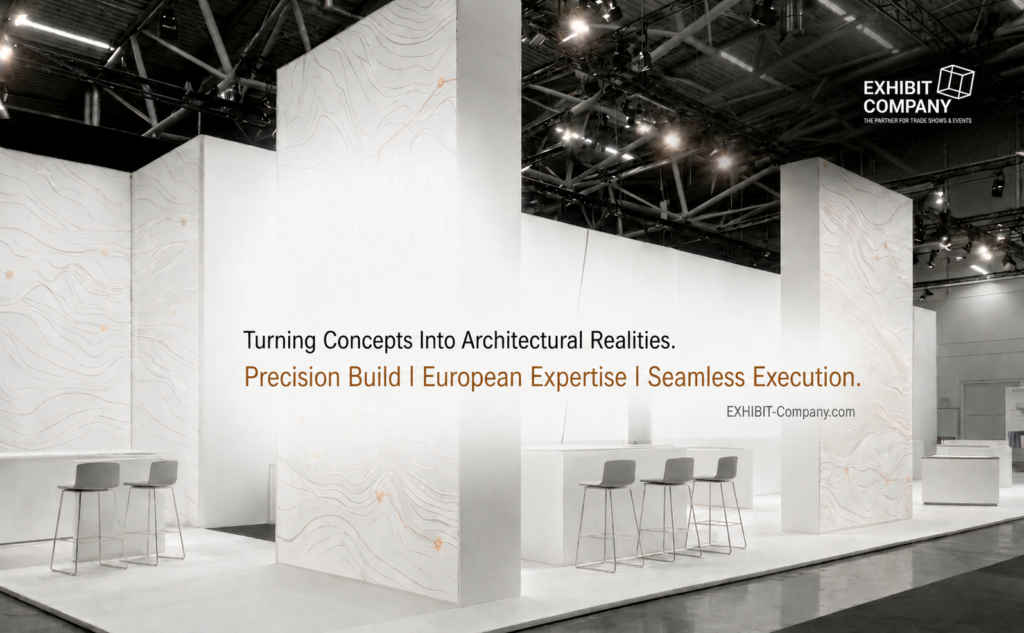
Exhibit Architecture refers to the multidisciplinary practice of designing, engineering, and structuring physical exhibition environments that shape how visitors experience brands, products, and information within trade shows, expos, museums, and branded events. It extends far beyond booth design—functioning as a fusion of architecture, spatial planning, engineering, psychology, and experiential storytelling.
In modern exhibition environments, Exhibit Architecture is understood as the systematic creation of three-dimensional brand worlds, where space is not only built but intentionally composed to guide movement, perception, and engagement. It integrates structural logic with narrative intent, ensuring that every wall, sightline, and circulation path serves both functional and communicative purposes.
Industry analysis consistently highlights that successful exhibition environments operate as “psychological systems” that guide attention, influence dwell time, and structure interaction outcomes.
The Role of Exhibit Architecture in Modern Trade Shows
Exhibit Architecture plays a central role in transforming a static booth footprint into an active engagement environment. In highly competitive exhibition halls, where attention is limited and decision-making is immediate, architectural design becomes a strategic communication tool.
Key functions include:
- Structuring visitor flow through spatial hierarchy
- Creating visual landmarks for brand recognition
- Designing engagement zones for different interaction levels
- Balancing openness with privacy for conversations
- Maximizing dwell time through intuitive spatial logic
A well-designed exhibition environment is not just seen—it is experienced as a controlled journey through space, light, and meaning.
Core Principles of Exhibit Architecture
1. Spatial Psychology and Visitor Behavior
At the core of Exhibit Architecture lies an understanding of human movement and perception. Visitors instinctively respond to:
- Open vs. enclosed spaces
- Light and contrast
- Visual anchors and focal points
- Natural circulation paths
Designers use these behavioral patterns to create environments that subtly guide visitors without forcing interaction. The most effective exhibit spaces reduce entry barriers while maintaining clear zones for engagement and conversion.
Research in trade show design consistently shows that booth layouts directly influence dwell time and engagement quality through psychological spatial planning.
2. Architectural Storytelling in Three Dimensions
Exhibit Architecture transforms brand messaging into spatial narrative. Instead of relying solely on graphics or signage, the story is embedded in the structure itself.
Common narrative layers include:
- Entry zones that introduce brand identity
- Central areas that communicate core value propositions
- Experience zones for product interaction
- Private zones for conversion and sales dialogue
This transforms the exhibition space into a walk-through brand experience rather than a static presentation surface.
3. Functional Zoning and Space Efficiency
Modern Exhibit Architecture divides space into clearly defined functional zones:
- Attraction zones: High-visibility branding and first contact points
- Engagement zones: Product demos and interactive areas
- Conversion zones: Meeting rooms and negotiation spaces
- Operational zones: Storage, staff areas, and logistics access
This zoning approach ensures that every square meter of the exhibit contributes to measurable performance outcomes.
4. Structural Engineering and Technical Integrity
Beyond aesthetics, Exhibit Architecture requires rigorous engineering to ensure safety, stability, and compliance with venue regulations.
Key considerations include:
- Load-bearing calculations for structural elements
- Material selection (aluminum, steel, wood, composites)
- Fire safety and emergency access compliance
- Modular or custom fabrication logic
- Installation and dismantling efficiency
Exhibition structures function as temporary architecture under real-world operational constraints, requiring precision engineering comparable to lightweight building systems.
5. Light, Material, and Atmosphere Design
Light and material selection are fundamental architectural tools in exhibition environments:
- Lighting defines focus, hierarchy, and emotional tone
- Materials communicate brand quality and values
- Surface textures influence perception of trust and credibility
- Color temperature affects visitor behavior and dwell time
A well-executed exhibit uses these elements to create controlled emotional and perceptual experiences rather than purely visual displays.
Exhibit Architecture vs. Exhibition Stand Design
Exhibit Architecture
- Macro-level spatial and structural planning
- Integration of engineering, psychology, and storytelling
- Focus on visitor journey and environmental experience
- Often used for large-scale or flagship installations
Exhibition Stand Design
- Micro-level booth layout and visual execution
- Focus on branding, graphics, and product presentation
- Typically limited to single brand spaces
Exhibit Architecture operates as the system-level framework, while stand design functions as the execution layer within that framework.
Strategic Importance of Exhibit Architecture
1. Enhancing Brand Perception
Architectural environments directly influence how brands are perceived. High-quality spatial design communicates:
- Innovation
- Stability
- Professionalism
- Market leadership
2. Increasing Engagement Quality
Well-structured exhibits improve:
- Visitor dwell time
- Conversation quality
- Lead conversion rates
- Product interaction depth
3. Supporting Sales and Marketing Objectives
Exhibit Architecture aligns physical space with business goals, ensuring that:
- High-value prospects are guided to private zones
- Product storytelling is structured and controlled
- Sales teams operate in optimized environments
4. Improving Operational Efficiency
Good architectural planning also improves:
- Installation speed
- Staff movement and usability
- Storage integration
- On-site logistics
Challenges in Exhibit Architecture
Balancing Creativity and Functionality
Highly creative designs must still meet practical constraints such as safety, budget, and buildability.
Venue and Regulatory Constraints
Exhibition halls impose strict rules regarding:
- Height limitations
- Fire safety compliance
- Structural load limits
- Emergency access pathways
Time-Compressed Execution Cycles
Exhibit Architecture must be designed for environments where build and dismantle windows are extremely limited.
Coordination Across Disciplines
Successful execution requires alignment between:
- Architects and designers
- Engineers and fabricators
- Brand teams and marketers
- Logistics and installation crews
Future Trends in Exhibit Architecture
1. Experience-Led Spatial Systems
Future exhibit environments are shifting from product display toward immersive brand ecosystems focused on engagement and storytelling.
2. Data-Driven Spatial Optimization
Visitor tracking and analytics are increasingly used to refine:
- Layout efficiency
- Engagement hotspots
- Conversion pathways
3. Hybrid Physical-Digital Architecture
Exhibit spaces are evolving into hybrid environments that integrate:
- LED and projection systems
- Interactive digital layers
- Real-time content adaptation
4. Sustainable Architectural Systems
Sustainability is reshaping exhibit construction through:
- Reusable modular frameworks
- Lightweight engineering systems
- Circular material usage strategies
Frequently Asked Questions (FAQ)
What is exhibit architecture?
Exhibit architecture is the design and engineering of exhibition environments that combine spatial planning, structural systems, and storytelling to create immersive brand experiences.
How is exhibit architecture different from booth design?
Booth design focuses on individual exhibition spaces, while exhibit architecture addresses the larger structural and experiential system behind those spaces.
Why is exhibit architecture important in trade shows?
It improves visitor flow, increases engagement, strengthens brand perception, and aligns physical space with marketing and sales objectives.
What disciplines are involved in exhibit architecture?
It combines architecture, interior design, engineering, lighting design, graphic design, and experiential marketing.
Is exhibit architecture only used for large exhibits?
No, it can be applied to both small booths and large-scale pavilions, but its principles become especially important in complex or high-traffic environments.
What makes good exhibit architecture?
Effective exhibit architecture balances creativity, functionality, visitor psychology, and engineering precision to create a seamless and engaging experience.