Stand Design
What Is Stand Design?
Stand Design refers to the strategic creation and development of exhibition stands used in trade shows, expos, and B2B events, combining spatial planning, architectural construction, branding, and visitor experience design into a single functional environment. It defines how a brand occupies physical space within a competitive exhibition hall and how that space communicates value, attracts attention, and drives engagement.
In professional exhibition practice, Stand Design is considered a commercial architecture discipline, where aesthetics, engineering, and marketing strategy converge into a physical brand environment. It is the translation of corporate identity into a three-dimensional space designed to perform under real-world visitor conditions.
Modern stand environments are no longer static display areas—they are experience-driven brand platforms engineered to capture attention within seconds and convert foot traffic into qualified business interactions.
The Strategic Purpose of Stand Design in Trade Shows
Stand Design is not simply about building a structure—it is about designing behavior. Every element within a stand influences how visitors perceive, enter, and interact with a brand.
Core strategic objectives include:
- Capturing attention within 3–5 seconds of aisle exposure
- Communicating brand positioning instantly and clearly
- Guiding visitor flow through intentional spatial logic
- Creating meaningful engagement opportunities
- Supporting lead generation and business conversion
In highly competitive exhibition environments, Stand Design becomes a performance tool rather than a decorative asset.
Core Principles of High-Performance Stand Design
1. Instant Visual Impact and Recognition
Trade show visitors scan environments rapidly, making first impression design critical. Effective Stand Design ensures that messaging is immediately readable and visually distinct.
Key components include:
- Strong focal points visible from a distance
- Clear brand hierarchy
- Minimal but powerful messaging
- High contrast color and lighting strategies
A successful stand communicates identity before a visitor even steps inside.
2. Spatial Clarity and Visitor Flow Engineering
Modern Stand Design is based on behavioral movement patterns rather than static layouts. Visitors respond to openness, visibility, and perceived accessibility.
Effective flow design includes:
- Multiple entry points (where booth type allows)
- Clear pathways through the space
- Defined engagement zones
- Avoidance of physical or visual barriers
Research and industry practice consistently show that open layouts increase dwell time and interaction rates.
3. Experience-Driven Zoning Strategy
High-performance Stand Design divides space into functional zones that guide visitor behavior:
- Attraction Zone: external branding and visual hooks
- Engagement Zone: product interaction and demos
- Conversion Zone: meetings and lead capture
- Support Zone: storage and operational space
This structure transforms a booth into a controlled visitor journey rather than an open, undefined space.
4. Vertical Visibility and Landmark Creation
In crowded exhibition halls, horizontal space competes with thousands of neighboring stands. Vertical design creates differentiation.
Vertical elements include:
- Elevated branding towers
- Hanging signage (where permitted)
- Tall LED or light structures
- Architectural frames and sculptural forms
Strong vertical presence often determines whether a stand becomes a navigation landmark.
Stand Design as a Brand Communication System
Messaging Hierarchy
Effective Stand Design follows a structured communication model:
- Primary message: core value proposition
- Secondary message: supporting benefit
- Tertiary message: product or technical detail
This hierarchy ensures clarity under rapid visitor scanning conditions.
Brand Consistency Across Touchpoints
Stand Design must align with broader brand ecosystems including:
- Digital marketing
- Sales materials
- Packaging systems
- Corporate identity guidelines
Consistency builds trust and accelerates recognition in fast-paced environments.
Material Language and Perception
Materials directly influence how visitors perceive brand quality. Common high-impact stand materials include:
- Tension fabric systems
- Backlit graphic walls
- Aluminum modular structures
- Premium laminates and finishes
- LED-integrated surfaces
Material selection is as much a strategic decision as a visual one.
Types of Stand Design Configurations
Stand Design is strongly shaped by booth geometry and placement.
Inline Stand Design
- One open side
- Linear structure constraints
- Heavy reliance on backwall messaging
- Vertical branding focus
Corner Stand Design
- Two open sides
- Strong dual-direction visibility
- Increased traffic exposure
- Flexible entry points
Peninsula Stand Design
- Three open sides
- High engagement potential
- Requires 360-degree design consistency
- Strong zoning opportunities
Island Stand Design
- Four open sides
- Maximum visibility and freedom
- Fully immersive brand environments
- Highest complexity level
Each configuration requires a different spatial and engagement logic.
Modern Stand Design Trends
Minimalist Structural Language
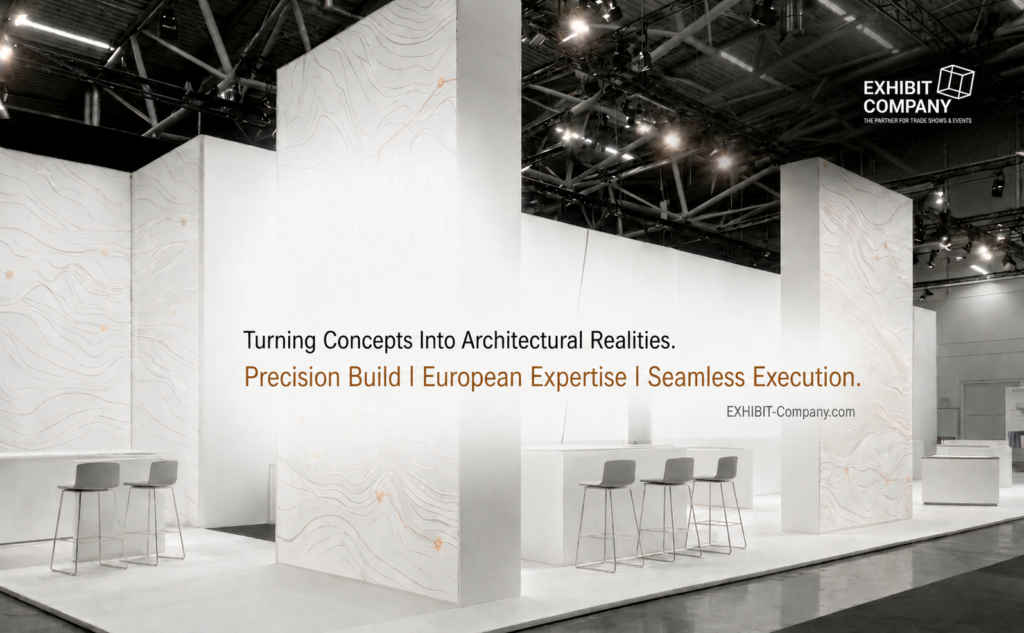
A major trend in exhibition environments is minimalism with high visual impact. Clean layouts, bold shapes, and reduced messaging improve clarity and engagement.
Sculptural and Architectural Forms
Custom geometric structures, curved walls, and asymmetric layouts are increasingly used to create landmark presence within exhibition halls.
Immersive Experience Elements
Modern stands integrate immersive components such as:
- Large-scale LED environments
- Projection mapping
- Interactive product zones
- Sensory design elements
These features transform stands into experiential spaces rather than static displays.
Hybrid Digital Integration
Digital systems are now central to Stand Design:
- Interactive touchscreens
- AR/VR product demonstrations
- Real-time data visualization
- AI-assisted engagement tools
Common Stand Design Mistakes
Overcrowded Messaging
Too much information reduces clarity and weakens impact.
Poor Entry Design
Blocked or unclear entry points reduce visitor flow and engagement rates.
Ignoring Aisle Visibility
Designing only for internal experience instead of external visibility limits performance.
Weak Lighting Strategy
Lighting directly influences attention, mood, and product perception.
Lack of Functional Zoning
Without structure, stands become congested and reduce interaction quality.
Sustainability in Stand Design
Sustainability is now a defining factor in exhibition planning.
Modern approaches include:
- Modular reusable stand systems
- Lightweight aluminum structures
- LED energy-efficient lighting
- Recyclable graphic materials
- Multi-event reconfiguration strategies
Sustainable Stand Design reduces environmental impact while improving long-term ROI.
Future Trends in Stand Design
Experience-Led Brand Environments
Stands are evolving into immersive environments focused on storytelling, interaction, and emotional engagement.
Data-Driven Design Optimization
Exhibitors increasingly use analytics to track:
- Visitor movement patterns
- Engagement hotspots
- Dwell time
- Conversion pathways
Hybrid Physical-Digital Ecosystems
Future Stand Design integrates:
- Physical product environments
- Digital interaction layers
- Remote participation systems
- Live content streaming
Stand Design Across Industries
Stand Design principles are applied across:
- Technology and SaaS exhibitions
- Industrial manufacturing fairs
- Healthcare and pharmaceutical congresses
- Automotive and mobility expos
- Energy and infrastructure events
- Consumer goods trade shows
Each industry adapts design logic to match audience behavior and complexity of communication.
Frequently Asked Questions (FAQ)
What is Stand Design in exhibitions?
Stand Design is the process of creating exhibition environments that combine architecture, branding, and visitor experience strategy to communicate a company’s message at trade shows and events.
Why is Stand Design important?
Because trade show visitors decide within seconds whether to engage, Stand Design directly impacts visibility, traffic flow, and lead generation success.
What makes a good Stand Design?
A good Stand Design is visually strong, easy to navigate, clearly branded, and structured around visitor behavior and engagement flow.
What are the main types of Stand Design?
The main types include inline, corner, peninsula, island, shell scheme, and space-only stand designs.
How does Stand Design influence trade show performance?
Effective Stand Design increases attention capture, improves visitor engagement, and enhances lead conversion rates by optimizing spatial experience.
What are current trends in Stand Design?
Key trends include minimalist architecture, immersive experiences, sustainable materials, and data-driven layout optimization.