Trade Show Display
What Is a Trade Show Display?
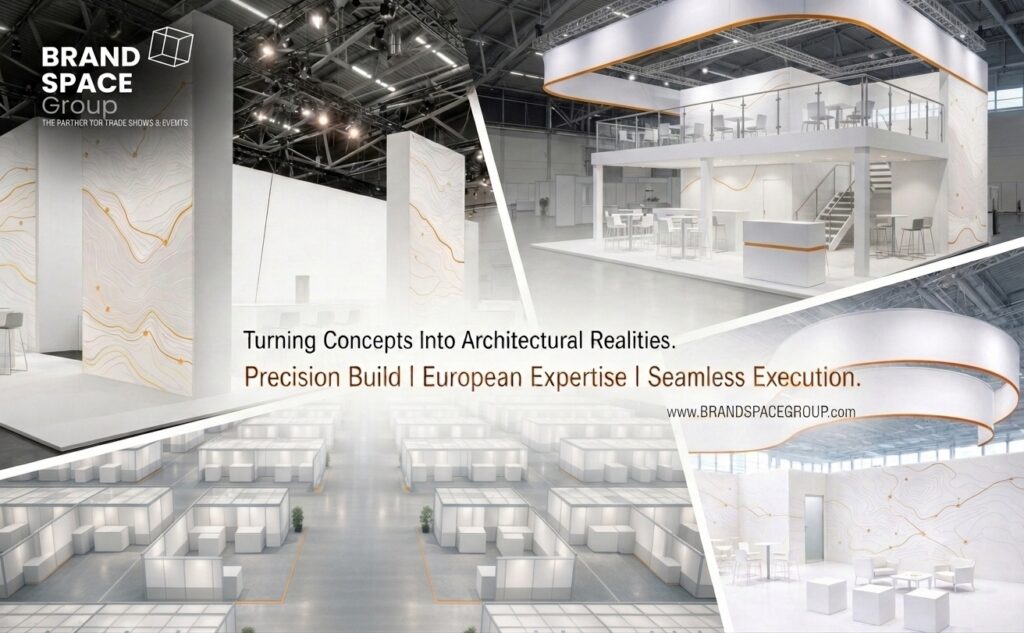
A Trade Show Display is a branded physical or modular exhibition system designed to present a company’s products, services, and messaging within a trade show, expo, or conference environment, combining structure, graphics, lighting, and sometimes digital technology to create a visually compelling presence that attracts visitors, communicates brand value, and supports lead generation on the exhibition floor.
In the modern exhibition industry, the term “trade show display” covers a wide spectrum—from simple pop-up banner systems to fully modular or custom-built booth environments with integrated lighting, multimedia, and experiential zones. It is the core physical interface between a brand and its audience at live events.
Why Trade Show Displays Matter in Modern Exhibitions
The First 3 Seconds Decide Everything
On a crowded exhibition floor, attendees make rapid decisions. A trade show display must:
- Capture attention instantly from the aisle
- Communicate brand identity in seconds
- Create a reason to stop and engage
- Differentiate from competing booths
Research on exhibit performance consistently shows that visual clarity and structural impact are key drivers of booth engagement, especially in high-density environments.
From Static Booths to Modular Brand Systems
Modern trade show displays are no longer static structures. They are evolving into flexible systems designed for reuse and reconfiguration, often built from modular components that can adapt to different booth sizes and layouts.
These systems typically include:
- Lightweight aluminum frame structures
- Interchangeable graphic panels
- Tool-free or fast assembly systems
- Reconfigurable layouts for multiple events
This modular approach allows exhibitors to scale from small inline booths to larger island configurations using the same core system.
A Core Tool for Experiential Marketing
Today’s trade show display is not just signage—it is a brand experience platform, supporting:
- Product demonstrations
- Live presentations
- Customer engagement zones
- Digital interaction points
- Sales conversations
The display becomes the physical environment where marketing strategy turns into real-world engagement.
Main Types of Trade Show Displays
1. Portable Trade Show Displays
Portable systems are designed for speed and simplicity:
- Lightweight construction
- Quick setup (often under 1 hour)
- Compact transport cases
- Ideal for small to mid-sized booths
Common examples include pop-up backwalls, banner stands, and tabletop displays.
2. Modular Trade Show Displays
Modular systems offer maximum flexibility:
- Reconfigurable booth structures
- Scalable for different booth sizes
- Replaceable graphics and components
- Professional custom-like appearance
These systems are widely used by companies attending multiple events per year because they balance cost efficiency and design impact.
3. Custom Trade Show Displays
Custom displays are fully engineered environments:
- Unique architectural booth designs
- High-end materials and finishes
- Built specifically for a brand identity
- Ideal for flagship exhibitions
They deliver maximum visual impact but require higher investment and logistics planning.
4. Hybrid Display Systems
Hybrid systems combine modular structures with custom elements:
- Modular base framework
- Custom-built feature walls or towers
- Integrated digital and lighting systems
- Flexible campaign updates
Core Components of a Trade Show Display
1. Backwalls and Branding Surfaces
The backwall is the visual anchor:
- Large-scale brand messaging
- High-visibility graphics
- Structural framing for booth identity
2. Graphics and Visual Communication
Modern displays rely heavily on visual storytelling:
- Fabric tension graphics (SEG systems)
- High-resolution printed panels
- Backlit visual surfaces
- Replaceable campaign messaging
3. Flooring and Spatial Definition
Flooring helps define the booth environment:
- Raised platforms
- Carpet or laminate finishes
- Zoned areas for meetings and demos
4. Lighting Systems
Lighting shapes perception:
- LED accent lighting
- Backlit branding walls
- Spotlight product illumination
- Ambient booth atmosphere
5. Technology Integration
Many modern displays include:
- LED video walls
- Interactive screens
- Product demo stations
- Lead capture systems
Key Benefits of Trade Show Displays
1. Strong Brand Visibility
A well-designed display ensures:
- High visibility from across the hall
- Immediate brand recognition
- Competitive differentiation
2. Increased Booth Traffic
Effective displays:
- Attract attendees naturally
- Encourage booth entry
- Extend dwell time
3. Flexible Use Across Events
Modular systems allow:
- Different configurations per show
- Updated branding per campaign
- Scalable booth sizes
4. Cost Efficiency Over Time
Reusable systems reduce:
- Rebuild costs
- Shipping inefficiencies
- Storage and waste
5. Faster Setup and Breakdown
Modern display systems are designed for:
- Quick installation
- Minimal labor requirements
- Efficient dismantling
Trade Show Display vs Trade Show Booth
Trade Show Display
- Focused on visual presentation systems
- Portable or modular components
- Often part of a larger booth
Trade Show Booth
- Full spatial environment
- Includes structure, furniture, and layout
- May contain multiple display systems
In practice, a trade show display is often the core visual and structural element inside a booth environment.
Industry Trends in Trade Show Displays
1. Shift Toward Modular Systems
Exhibitors increasingly prefer:
- Reusable frameworks
- Scalable booth components
- Multi-event adaptability
2. Experience-Driven Design
Displays are becoming more immersive:
- Interactive environments
- Product storytelling zones
- Hospitality-focused layouts
3. Sustainability as a Standard
Modern displays emphasize:
- Reusable materials
- Reduced transport weight
- Lower environmental impact
4. Digital Integration
Increasingly standard features include:
- LED walls
- Interactive touchscreens
- Hybrid event connectivity
Who Uses Trade Show Displays?
Ideal for:
- Startups entering trade shows
- SMEs scaling exhibition presence
- Global brands attending multiple events
- Marketing teams running campaign activations
- Product companies showcasing innovations
Frequently Asked Questions (FAQ)
What is a trade show display?
A trade show display is a branded system used to present a company at exhibitions, including graphics, structure, and sometimes digital elements.
What is the difference between a display and a booth?
A display is the visual system inside a booth, while a booth includes the full physical space and setup.
What are modular trade show displays?
They are reusable systems made of interchangeable components that can be reconfigured for different events.
Are trade show displays reusable?
Yes, most modern systems are designed for multiple uses across different exhibitions.
How long does it take to set up a display?
Portable systems can be set up in under an hour, while larger modular systems take longer depending on complexity.
What materials are used in trade show displays?
Common materials include aluminum frames, fabric graphics, acrylic, wood, and digital components.
Can trade show displays include digital screens?
Yes, many modern displays integrate LED walls, monitors, and interactive technology.