Space Only Booth
What Is a Space Only Booth?
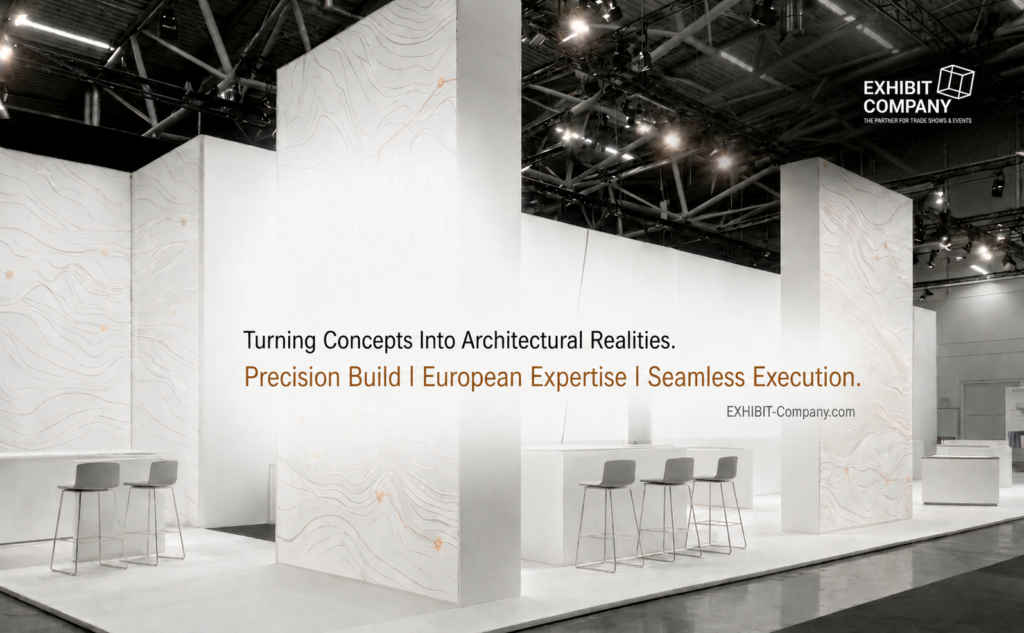
A Space Only Booth (often also referred to as “raw space,” “space only exhibit,” or “bare space stand”) is an exhibition format where the organizer provides nothing more than a clearly marked floor area within the exhibition hall. Everything else—structure, flooring, walls, lighting, utilities, branding, and visitor experience design—is fully developed and installed by the exhibitor or their appointed stand contractor.
In essence, a Space Only Booth is a blank architectural canvas on the trade show floor, offering maximum freedom to design and build a completely customized exhibition environment from the ground up.
This format is widely used at major international trade fairs, B2B industry exhibitions, and global expo environments where brands aim to create high-impact, fully immersive visitor experiences rather than relying on standardized shell scheme systems.
Understanding the Space Only Booth Concept
Unlike pre-built exhibition packages, a Space Only Booth starts with zero infrastructure.
Typically, exhibitors receive:
- A marked-out floor space (measured in square meters or feet)
- Location within a hall layout
- Access to venue services (ordered separately)
- Compliance guidelines from the organizer
Everything else must be planned and delivered independently, including:
- Stand construction and architecture
- Flooring systems and structural build
- Electrical and lighting installation
- Branding, graphics, and signage
- Furniture, AV, and interactive elements
- Storage, meeting areas, and hospitality zones
This makes Space Only Booths the most flexible—and also the most complex—exhibition format in the trade show ecosystem.
Why Space Only Booths Are the Preferred Choice for Custom Exhibits
Unlimited Creative Freedom
Space Only Booths remove structural limitations entirely, allowing exhibitors to design without constraints.
This enables:
- Fully custom architectural concepts
- Multi-level stand structures (where permitted)
- Immersive brand environments
- Large-scale product demonstrations
- Experience-driven spatial storytelling
For brands that want to stand out in crowded exhibition halls, this freedom is a critical advantage.
Maximum Brand Control
With a Space Only Booth, every element of the visitor experience is controlled by the exhibitor.
This includes:
- Visitor journey design
- Visual identity execution
- Spatial layout strategy
- Engagement touchpoints
- Conversion and lead capture zones
Instead of adapting to a predefined structure, brands define their own exhibition logic.
Scalability Across Different Events
Space Only Booth systems are often designed to be modular and reusable, allowing exhibitors to adapt a core stand concept across multiple shows with different footprints and configurations.
This approach supports:
- Cost efficiency over time
- Brand consistency across markets
- Faster deployment at future events
- Sustainable exhibition practices
Space Only Booth vs. Shell Scheme
Space Only Booth
- Empty floor space only
- Fully custom-built stand
- No pre-installed structure
- High design flexibility
- Higher planning and production responsibility
Shell Scheme Booth
- Pre-built wall system provided
- Basic lighting and structure included
- Limited customization options
- Faster and easier setup
- Lower complexity for first-time exhibitors
The key distinction is ownership of the environment: Space Only Booths require exhibitors to design and build everything, while shell schemes provide a ready-made framework.
Key Advantages of Space Only Booths
High-Impact Brand Presence
Space Only Booths enable large-scale visual storytelling that can dominate exhibition environments when executed effectively.
Typical advantages include:
- Strong architectural identity
- High visibility from multiple aisles
- Ability to create landmark booth structures
- Premium brand positioning
Optimized Visitor Experience Design
Because the layout is fully controlled, exhibitors can engineer the visitor journey in detail:
- Clear entry and exit points
- Defined engagement zones
- Product demonstration areas
- Private meeting spaces
- Hospitality and networking areas
This leads to more structured and higher-quality interactions.
Ideal for Complex Product Displays
Space Only Booths are especially effective for:
- Machinery and industrial equipment
- Automotive displays
- Technology ecosystems
- Large-scale product demonstrations
- Interactive installations
The absence of structural restrictions allows for real-world product environments inside the exhibition hall.
Challenges of Space Only Booths
Higher Planning Complexity
Space Only Booths require detailed coordination across multiple disciplines:
- Exhibition stand design
- Structural engineering
- Logistics and transport
- Health and safety compliance
- Electrical and AV integration
Without experienced project management, execution risks increase significantly.
Greater Budget Responsibility
Because everything is custom-built, costs can increase due to:
- Stand fabrication
- Materials and construction
- Freight and installation
- Technical services
- On-site labor
However, these costs are often offset over multiple uses when modular systems are deployed.
Regulatory and Compliance Requirements
Exhibitors must adhere to strict venue rules regarding:
- Fire safety standards
- Structural load limits
- Height restrictions
- Emergency access routes
- Technical approvals and submissions
Approval processes are typically required well in advance of build-up.
Design Strategy for Space Only Booths
Start With Visitor Experience, Not Structure
High-performing Space Only Booths begin with a strategic question:
“What should visitors feel and do inside the space?”
From there, the design is built around:
- Engagement flow
- Conversion points
- Content delivery moments
- Interaction zones
Zoning as a Core Design Principle
Most effective Space Only Booths are divided into functional zones:
- Attraction Zone: high-impact visuals, digital screens, branding
- Engagement Zone: product demos and hands-on interaction
- Meeting Zone: structured sales conversations
- Hospitality Zone: seating and networking areas
This structure prevents overcrowding and improves visitor clarity.
Vertical Architecture for Visibility
In large exhibition halls, vertical design elements are critical:
- Tall branding towers
- Hanging signs (where permitted)
- Elevated LED structures
- Multi-level architectural features
Verticality ensures visibility beyond immediate aisle traffic.
Technology Integration in Space Only Booths
Modern Space Only Booths increasingly function as hybrid digital-physical environments.
Common integrations include:
- LED walls and immersive displays
- Interactive touchscreens
- AR/VR product simulations
- Smart lead capture systems
- Real-time analytics dashboards
- Digital product configurators
These tools enhance engagement and provide measurable performance insights.
Sustainability in Space Only Booth Design
Sustainability is becoming a defining factor in exhibition strategy.
Modern Space Only Booths increasingly use:
- Modular reusable structures
- Lightweight aluminum systems
- Recyclable graphics and materials
- LED lighting solutions
- Reduced transport and packaging systems
A modular Space Only Booth can be reconfigured across multiple events, significantly reducing environmental impact and long-term cost per show.
Industry Applications of Space Only Booths
Space Only Booths are widely used across:
- Technology and software exhibitions
- Manufacturing and industrial trade fairs
- Healthcare and life sciences events
- Automotive and mobility expos
- Energy and sustainability conferences
- Consumer electronics shows
They are especially common among companies with established exhibition strategies and multi-event participation plans.
Future Trends in Space Only Booth Design
Experience-First Exhibition Architecture
Space Only Booths are evolving into immersive brand environments focused on storytelling and interaction rather than static display.
Data-Driven Booth Optimization
Exhibitors are increasingly using:
- Visitor heat mapping
- Behavioral analytics
- Engagement tracking systems
to refine booth performance.
Hybrid Physical-Digital Ecosystems
Future booths increasingly merge:
- Physical product environments
- Digital content layers
- Remote participation tools
- AI-driven engagement systems
Frequently Asked Questions (FAQ)
What is a Space Only Booth at a trade show?
A Space Only Booth is a raw exhibition space provided by the organizer with no structure, walls, or equipment. Exhibitors design and build the entire stand themselves.
What is included in a Space Only Booth package?
Typically only the floor space is included. All infrastructure such as flooring, walls, lighting, furniture, and utilities must be ordered separately.
Is a Space Only Booth more expensive than a shell scheme?
Yes, initial costs are usually higher due to custom design and construction. However, modular designs can reduce long-term costs across multiple events.
Who should choose a Space Only Booth?
Space Only Booths are ideal for established brands, companies with complex product displays, and exhibitors seeking maximum creative control and brand impact.
What are the main advantages of Space Only Booths?
They offer full design freedom, stronger brand presence, scalable architecture, and the ability to create fully immersive visitor experiences.
What are the biggest challenges?
Higher complexity, increased planning requirements, regulatory compliance, and greater coordination across multiple suppliers and contractors.