Custom Exhibit
What Is a Custom Exhibit?
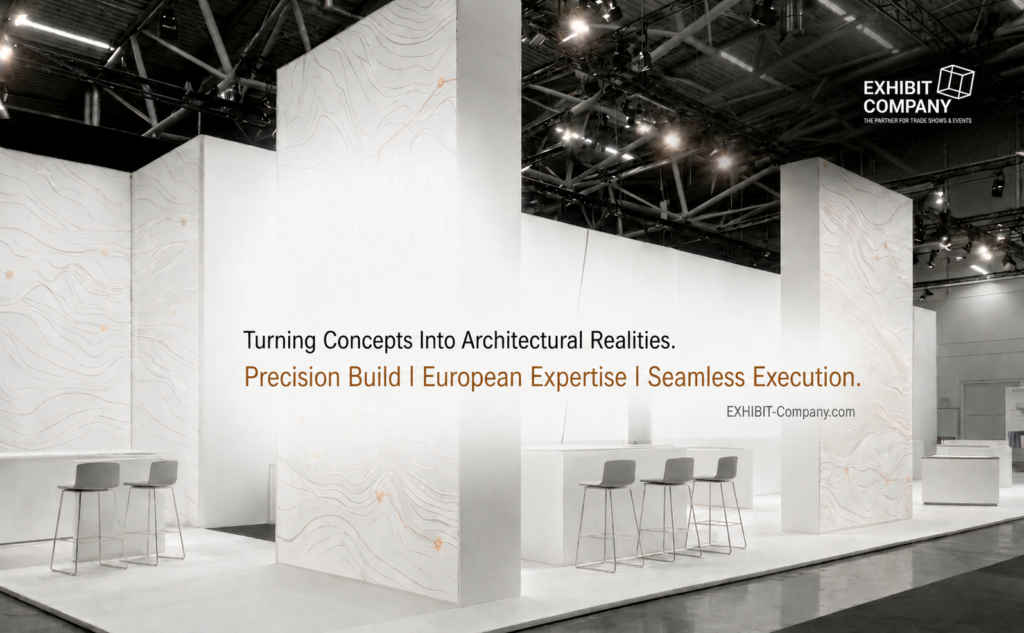
A Custom Exhibit is a fully tailored exhibition environment designed and fabricated specifically for a single brand, campaign, or strategic event objective. Unlike modular systems or rental booths, a custom exhibit is engineered from the ground up to reflect a company’s identity, messaging architecture, and visitor experience goals within a defined trade show footprint.
In industry terms, a Custom Exhibit represents the highest level of exhibition environment customization, combining architecture, branding, engineering, and experiential design into a unified physical communication platform. It is not a standardized kit—it is a purpose-built brand environment designed to perform under real exhibition conditions.
A true custom exhibit may incorporate unique structures, sculptural elements, integrated technology, and immersive spatial storytelling that cannot be replicated through off-the-shelf systems.
The Strategic Role of a Custom Exhibit in Trade Shows
A Custom Exhibit functions as a strategic marketing asset rather than a temporary display. In competitive exhibition environments, where attention is measured in seconds, the exhibit becomes a controlled environment designed to influence perception, behavior, and engagement outcomes.
Core strategic objectives include:
- Establishing immediate brand recognition on a crowded show floor
- Differentiating from competitors through physical presence and design language
- Structuring visitor flow to maximize engagement quality
- Enabling high-value conversations, demos, and lead capture
- Supporting long-term brand positioning across multiple events
Custom exhibits are particularly effective when brand storytelling, product complexity, or market positioning requires more than a standardized presentation format.
What Defines a True Custom Exhibit
Not all “custom” exhibits are equally customized. In practice, custom can range from lightly modified modular systems to fully engineered, one-of-a-kind builds.
A genuine Custom Exhibit typically includes:
- Purpose-built structural design (not preconfigured kits)
- Unique spatial layout aligned with marketing strategy
- Integrated meeting, demo, and hospitality zones
- Custom-fabricated architectural elements
- Advanced lighting, AV, and digital integration systems
- Brand-specific materials, textures, and finishes
Unlike modular systems, custom exhibits are designed around behavioral experience and brand narrative rather than structural limitations.
When a Custom Exhibit Makes Strategic Sense
A Custom Exhibit is not automatically the right solution for every exhibitor. Its value becomes most visible under specific strategic conditions.
High-Frequency Exhibitors at Major Trade Shows
Brands attending multiple large-scale exhibitions benefit from a reusable, high-impact asset that reinforces long-term positioning.
Complex Product or Service Demonstrations
Industries such as technology, healthcare, manufacturing, and engineering often require dedicated demo zones, which custom layouts can accommodate.
Brand Differentiation Requirements
When category competition is high, physical differentiation becomes a critical performance factor.
High-Value Sales Environments
Exhibits designed for enterprise sales, partnership negotiations, or VIP engagement often require private, controlled spaces.
Design Principles of High-Performance Custom Exhibits
1. Experience-Driven Spatial Architecture
Modern Custom Exhibits are designed as visitor journeys rather than static layouts. Space is divided into functional zones:
- Attraction zone (visual impact and stopping power)
- Engagement zone (product interaction and storytelling)
- Conversion zone (meetings and lead capture)
- Support zone (storage and operational efficiency)
This zoning transforms the exhibit into a structured engagement environment rather than an open floor plan.
2. Immediate Visual Communication
Visitors decide within seconds whether to engage. Custom Exhibit design prioritizes instant clarity:
- One dominant visual message
- Highly readable brand positioning
- Minimal cognitive load
- Strong distance visibility
The most effective exhibits communicate “who we are and why it matters” before visitors enter the space.
3. Architectural Differentiation
Custom exhibits often use non-standard structural language to create memorability:
- Curved or sculptural forms
- Multi-level or layered structures
- Suspended or elevated design elements
- Custom lighting architecture
These elements create landmark presence within the exhibition hall, increasing foot traffic and recall.
4. Integrated Technology Ecosystems
Modern Custom Exhibits increasingly incorporate digital infrastructure:
- LED video walls and immersive displays
- Interactive touchpoints and kiosks
- AR/VR product visualization tools
- Data-driven lead capture systems
Technology is not additive—it is embedded into the spatial design from the beginning.
Custom Exhibit vs. Modular and Rental Systems
Custom Exhibit
- Fully bespoke structural and visual design
- Maximum brand differentiation
- High flexibility in layout and storytelling
- Higher investment and production complexity
- Best for flagship events and long-term programs
Modular Exhibit
- Reconfigurable system-based structure
- Balanced cost and flexibility
- Limited architectural freedom
Rental Exhibit
- Prebuilt structures with branding overlays
- Lower upfront investment
- Minimal customization capability
Custom exhibits are not inherently “better”—they are strategically appropriate when brand impact outweighs structural simplicity.
Benefits of a Custom Exhibit
1. Maximum Brand Impact
Custom environments allow full control over storytelling, ensuring the physical space reflects brand positioning without compromise.
2. Optimized Visitor Flow
Layouts are designed specifically for engagement behavior, improving dwell time and interaction quality.
3. Higher Lead Quality
Structured environments guide visitors through intentional touchpoints, improving qualification and conversion rates.
4. Long-Term Brand Asset Value
When designed for reuse, a Custom Exhibit becomes a multi-event marketing asset rather than a single-use structure.
Challenges and Considerations
Investment Level
Custom exhibits require higher upfront investment due to design, engineering, fabrication, and logistics complexity.
Production Timelines
Development cycles are longer, often requiring weeks to months of planning and fabrication.
Logistics and Storage
Transport, installation, dismantling, and storage must be factored into lifecycle planning.
Strategic Alignment
Without clear objectives, custom builds risk becoming visually impressive but operationally inefficient.
Sustainability in Custom Exhibit Design
Sustainability is increasingly integrated into custom exhibit strategy through:
- Reusable modular structural systems
- Lightweight aluminum frameworks
- Recyclable graphic materials
- LED energy-efficient lighting
- Multi-event lifecycle planning
Sustainable design reduces environmental impact while improving long-term cost efficiency across multiple exhibitions.
Future Trends in Custom Exhibits
Experience-First Design Models
Exhibits are evolving into immersive brand environments focused on storytelling, interaction, and emotional engagement.
Hybrid Physical-Digital Integration
Future exhibits increasingly combine physical architecture with digital ecosystems, enabling:
- Live content streaming
- Remote participation
- Real-time data visualization
Data-Driven Exhibit Optimization
Advanced exhibitors are using analytics to track:
- Visitor movement patterns
- Engagement hotspots
- Dwell time behavior
- Conversion paths
Frequently Asked Questions (FAQ)
What is a Custom Exhibit?
A Custom Exhibit is a fully bespoke trade show environment designed specifically for a brand, built from the ground up to support unique branding, engagement, and spatial requirements.
What makes an exhibit “custom”?
A true custom exhibit uses unique structural design, tailored layouts, and brand-specific fabrication rather than prebuilt modular systems or rental components.
Is a Custom Exhibit expensive?
Yes, custom exhibits typically require higher investment due to design complexity, fabrication, logistics, and installation—but they can deliver higher long-term value when reused across events.
When should I choose a Custom Exhibit?
Custom exhibits are ideal for companies with strong brand differentiation needs, complex product demonstrations, or frequent participation in major trade shows.
What is the difference between Custom and Modular Exhibits?
Custom exhibits are fully bespoke and unrestricted in design, while modular exhibits use standardized systems that can be reconfigured within defined structural limits.
Can a Custom Exhibit be reused?
Yes, many modern custom exhibits are designed as modular-custom hybrids that can be reconfigured and reused across multiple events and booth sizes.