Booth Design
What Is Booth Design?
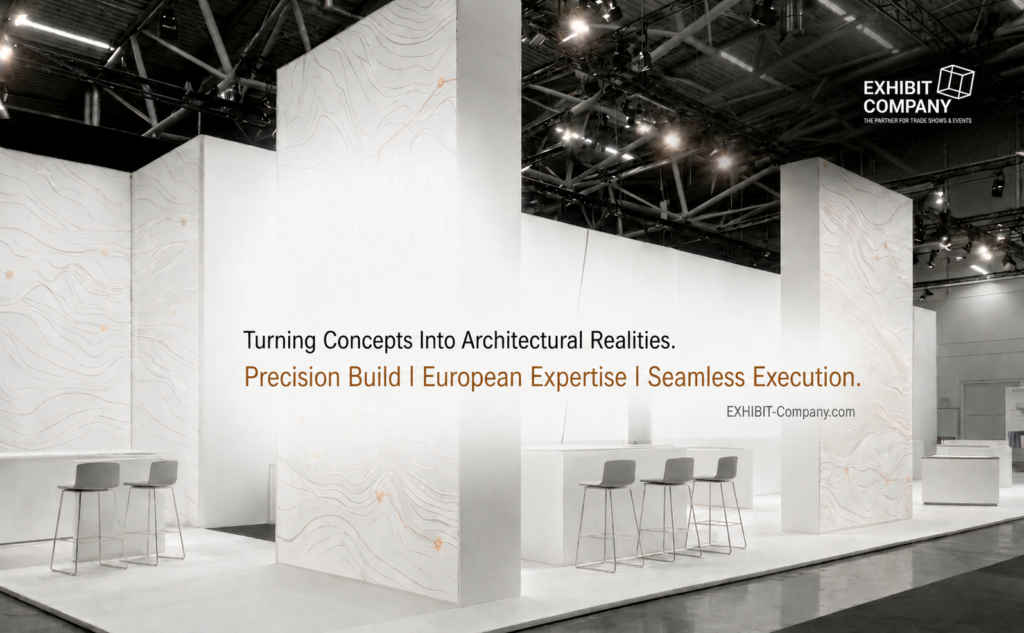
Booth Design refers to the strategic planning, architectural development, and visual execution of an exhibition stand within a trade show, expo, or industry event environment. It combines spatial planning, brand communication, visitor psychology, and functional layout engineering to create an environment that attracts attendees, supports engagement, and drives measurable business outcomes.
In modern exhibition practice, Booth Design is no longer treated as a purely aesthetic discipline. It is a performance-driven marketing system, where every square meter is engineered to influence visitor behavior within seconds of first contact. Research across the exhibition industry shows that attendees typically decide within a few seconds whether to engage with a booth, making design a critical factor in conversion success.
The Strategic Role of Booth Design in Modern Exhibitions
Booth Design sits at the intersection of marketing strategy and spatial experience. It is responsible for translating a brand’s positioning into a physical environment that performs under real-world exhibition conditions.
Key strategic objectives include:
- Capturing attention within 3–7 seconds of visual exposure
- Communicating brand value instantly and clearly
- Guiding visitor flow through intentional spatial design
- Enabling meaningful conversations and lead generation
- Differentiating the brand within highly competitive environments
A well-designed booth is not decorative—it is a conversion environment built for human movement, attention, and decision-making.
Core Principles of Effective Booth Design
Clarity Over Complexity
One of the most consistent principles in high-performing booth environments is message simplicity. Attendees move quickly through crowded halls, and overly complex messaging reduces engagement.
Effective Booth Design focuses on:
- One primary value proposition
- Minimal but high-impact text
- Clear visual hierarchy
- Immediate brand recognition
Industry best practice consistently shows that simplicity increases comprehension and engagement speed.
Open Floor Planning and Visitor Flow
Modern Booth Design prioritizes openness over enclosure. The most successful exhibition spaces are designed to feel approachable rather than restrictive.
Key layout principles include:
- Multiple entry points where possible
- Clear walk-in pathways
- No barriers at the booth front
- Defined zones for different engagement types
- Natural visitor movement patterns
Open layouts significantly increase dwell time and interaction rates by reducing psychological entry barriers.
Vertical Visibility Strategy
In competitive exhibition environments, horizontal space is limited—but vertical space is underutilized. Effective Booth Design uses height to create visibility from across the hall.
Common vertical strategies include:
- Tall backwalls with bold messaging
- Hanging signage (where permitted)
- Elevated LED displays
- Vertical light structures
- Tiered product presentation systems
Vertical design ensures brand visibility beyond immediate aisle traffic and improves long-distance recognition.
Booth Design and Visitor Psychology
The 3–5 Second Attention Window
Trade show attendees process visual environments extremely quickly. Booth Design must communicate value almost instantly.
Effective booths typically answer three questions immediately:
- Who is this company?
- What do they offer?
- Why should I care?
If these answers are unclear within seconds, engagement drops sharply.
Flow, Not Just Form
High-performing Booth Design is built around movement behavior rather than static aesthetics. Visitors rarely enter booths randomly—they respond to visual cues, open spaces, and perceived value.
Effective flow design includes:
- Entry points aligned with aisle traffic
- Clear focal points inside the booth
- Logical product or service progression
- Defined stopping points for interaction
Comfort and Dwell Time Engineering
Trade show visitors walk long distances during events, which makes comfort a subtle but powerful design factor.
Elements that increase dwell time include:
- Comfortable flooring materials
- Seating zones for conversation
- Balanced lighting (not overly harsh or dim)
- Open spacing to reduce crowding
Even small improvements in comfort can significantly increase engagement duration.
Booth Design Types and Spatial Configurations
Booth Design is heavily influenced by booth type and location on the exhibition floor.
Inline Booth Design
- Single open side
- Linear layout constraints
- Focus on vertical messaging
- High reliance on backwall branding
Corner Booth Design
- Two open sides
- Increased visibility and access
- Strong emphasis on dual-direction branding
- Improved traffic exposure
Peninsula Booth Design
- Three open sides
- High engagement potential
- Requires 360-degree visual consistency
- Strong zoning opportunities
Island Booth Design
- Four open sides
- Maximum visibility and flexibility
- Fully immersive brand environments
- Complex visitor flow planning
Each configuration demands a different spatial and messaging strategy.
Key Elements of High-Performance Booth Design
1. Messaging Architecture
Strong Booth Design is built on a clear messaging hierarchy:
- Primary headline (core value proposition)
- Secondary supporting message
- Product or service reinforcement
- Call-to-action elements
2. Lighting Design Strategy
Lighting is one of the most influential yet underutilized elements in Booth Design.
Effective lighting achieves:
- Visual attraction from distance
- Highlighting of key products
- Zoning without physical barriers
- Emotional atmosphere creation
3. Material and Finish Selection
Material choices directly influence perceived brand quality.
Common high-performance materials include:
- Tension fabric systems
- Backlit graphic panels
- Modular aluminum structures
- Premium laminate finishes
4. Interactive Engagement Elements
Modern Booth Design increasingly incorporates interaction to extend dwell time:
- Touchscreens and digital kiosks
- Product demonstrations
- Live presentations
- AR/VR experiences
- QR-based content access
Booth Design Mistakes That Reduce Performance
Overloading Information
Too much text or too many messages reduces clarity and overwhelms visitors.
Weak Visual Hierarchy
Without a clear focal point, visitors do not know where to look first.
Poor Entry Design
Closed or obstructed entry points reduce walk-in rates significantly.
Ignoring Aisle Behavior
Designing for internal aesthetics instead of external visibility weakens performance.
Inconsistent Branding
Disconnect between digital branding and physical booth experience reduces trust and recognition.
Sustainability in Booth Design
Sustainability is becoming a core requirement in modern exhibition strategy.
Key approaches include:
- Modular reusable booth systems
- Lightweight recyclable materials
- LED energy-efficient lighting
- Multi-event reconfiguration strategies
- Reduced transport volume design
Sustainable Booth Design not only reduces environmental impact but also improves long-term ROI.
Future Trends in Booth Design
Experience-Led Design Environments
Booths are evolving from display spaces into immersive brand environments focused on storytelling and engagement.
Hybrid Physical-Digital Integration
Modern Booth Design increasingly integrates:
- Live digital content
- Remote participation tools
- Real-time data visualization
- AI-assisted engagement systems
Data-Driven Optimization
Exhibitors are now using analytics to measure:
- Visitor movement patterns
- Engagement hotspots
- Conversion points
- Dwell time performance
These insights are used to continuously refine booth layouts.
Booth Design Across Industry Applications
Booth Design principles are applied across sectors such as:
- Technology and SaaS exhibitions
- Manufacturing and industrial trade fairs
- Healthcare and medical congresses
- Automotive and mobility expos
- Energy and infrastructure events
- Consumer goods and retail fairs
Each industry adapts Booth Design principles to match audience behavior and product complexity.
Frequently Asked Questions (FAQ)
What is Booth Design in exhibitions?
Booth Design is the process of planning and creating a trade show stand that combines branding, spatial layout, and visitor experience strategy to attract and engage attendees.
Why is Booth Design important?
Because attendees decide within seconds whether to engage, Booth Design directly impacts visibility, traffic flow, and lead generation performance.
What makes a good Booth Design?
A good Booth Design is clear, visually strong, easy to navigate, and focused on a single primary message with strong visitor flow and engagement zones.
What are the main types of Booth Design?
The main types include inline, corner, peninsula, island, shell scheme, and space-only booth designs.
How does Booth Design affect trade show ROI?
Effective Booth Design increases foot traffic, improves engagement quality, and supports higher lead conversion rates, directly improving return on investment.
What are current trends in Booth Design?
Key trends include experience-led environments, digital integration, sustainable materials, and data-driven layout optimization.